Red Sea marine life Hurghada
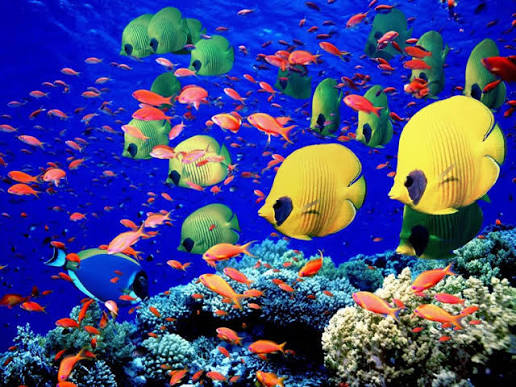
The Red Sea combines coral reefs, seagrass, sandy lagoons, offshore islands and deep water in a relatively compact region. Around Hurghada, this creates habitats for tiny reef creatures, colourful fish, rays, turtles and occasional open-water visitors. A good marine-life dive is not measured only by the largest animal seen; the reef’s relationships are the real attraction.
An Egyptian Environmental Affairs Agency report records 345 soft- and hard-coral species across the Egyptian Red Sea and notes the importance of offshore islands, seagrass and turtle habitat. That regional biodiversity does not mean every species occurs at every Hurghada site, but it explains why careful observation can make repeat dives feel different.
Corals: The Foundation of the Reef
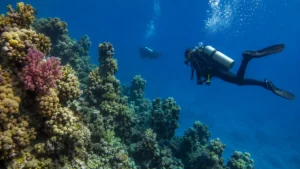
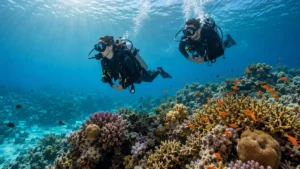
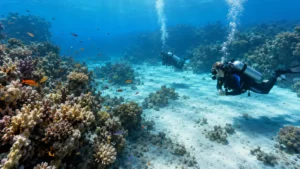
Hard corals build much of the reef’s physical structure, while soft corals add movement and color. Branching, massive and table-like forms create shelter for fish and invertebrates. Corals are living colonies, not rocks. A fin kick, handhold or kneeling diver can damage growth that took years to develop.
Common Reef Fish
- Butterflyfish and angelfish moving in pairs around coral heads.
- Parrotfish grazing the reef surface and helping recycle reef material.
- Surgeonfish, rabbitfish and wrasse feeding across different reef zones.
- Anemonefish staying close to the protection of their host anemone.
- Anthias forming bright clouds above coral when conditions are calm.
- Groupers, snappers and emperors patrolling reef edges and sandy areas.
Masters of Camouflage
Some of Hurghada’s most interesting animals are easy to miss. Octopuses change texture and colour. Scorpionfish blend with rock and coral. Crocodilefish rest on sand, while moray eels watch from crevices. Lionfish may hover beneath overhangs or hunt in low light. Never place a hand on the reef without seeing exactly what is there.
Rays and Sandy Bottom Species
Blue spotted stingrays are frequently associated with sandy patches near coral. Divers may also see goatfish searching the sand, garden eels retreating into burrows and flounders using camouflage. Give rays a clear path and avoid crowding an animal for photographs.
Turtles
Green and hawksbill turtles are among the best-known Red Sea residents. Official Egyptian reporting recognizes several marine-turtle species in the wider Egyptian Red Sea. Around Hurghada, a turtle encounter is possible but never guaranteed. Stay horizontal, avoid blocking the animal’s route to the surface and do not touch its shell.
Dolphins
Dolphins move through parts of the Hurghada region, including reef systems popularly marketed as Dolphin House. They choose whether to approach. Boats and swimmers should avoid chasing, surrounding or separating animals. A respectful distant encounter is better than forcing a close one.
Sharks and Larger Visitors
Sharks belong to the Red Sea ecosystem, but ordinary local reef diving around Hurghada should not be sold as guaranteed shark diving. Barracuda, jacks, tuna and eagle rays may appear in open water, especially around exposed reefs, yet sightings vary with season and conditions. Listen to the briefing and keep good group awareness when watching the blue.
When Is Marine Life Best?
There is no single month when every species appears. Water temperature, plankton, breeding behaviour, current and food availability influence encounters. Resident reef fish can be observed throughout the year, while larger mobile animals are less predictable. Choose the season for your comfort and diving goals, then treat wildlife as a welcome surprise rather than a booking guarantee.
How to Observe Marine Life Responsibly
Control buoyancy before approaching the reef or taking photographs.
Keep fins, gauges and alternate air sources away from coral and sand.
Never touch, feed, chase or block an animal’s escape route.
Use calm movements and allow wildlife to choose the distance.
Report damaged coral, entanglement or unusual sightings to the guide
Discover the Reef with an Experienced Guide
A local guide knows where small animals hide and how current changes the route. Rentola’s French-speaking dive professionals can help you identify species while keeping the encounter safe and respectful.
Frequently Asked Questions
Will I see dolphins while diving in Hurghada?
It is possible in certain areas, but no responsible operator can guarantee a wild dolphin encounter.
Are sharks common on local Hurghada dives?
Sharks occur in the wider Red Sea, but they are not a routine sight on every local Hurghada reef dive.
Can divers touch coral?
No. Coral is living and fragile, and contact can injure the reef as well as the diver.
What is the best way to photograph marine life?
Establish neutral buoyancy first, approach slowly, avoid contact and never manipulate an animal for a picture.