Open Water Diver Course in Hurghada: Complete Guide
An Open Water Diver course is the usual starting point for anyone who wants to become an independently certified recreational diver. Hurghada provides a strong learning environment because students can practise in controlled conditions before applying their skills on Red Sea reefs.
Course details differ between PADI, SSI, SDI, CMAS and other recognized training systems. The selected dive center must explain which agency issues the certification, exactly what the program includes and which standards apply. This guide describes the common course journey without claiming that every agency follows an identical schedule.
What Is an Open Water Diver Certification?
The qualification teaches the core knowledge and practical skills needed for recreational scuba diving within the limits of training and experience. Under PADI standards, an adult Open Water Diver is trained to a maximum depth of 18 metres. Junior depth and supervision limits depend on age. Other agencies use their own standards, so students should check the rules printed with their certification.
Who Can Join?
Eligibility depends on age, health, water comfort and the chosen agency. PADI states that the minimum age is generally 10, with Junior Open Water certification applying below age 15. Student divers complete a medical questionnaire, and certain answers require clearance from a physician before in-water training.
For PADI Open Water training, students must also demonstrate basic watermanship: a 200-metre swim without aids or a 300-metre swim using mask, fins and snorkel, plus floating or treading water for ten minutes. These are safety requirements, not a speed competition.
The Three Main Parts of the Course
Knowledge development: learn pressure, equipment, breathing-gas management, planning, communication and safe-diving principles through eLearning, classroom study or a blended format.
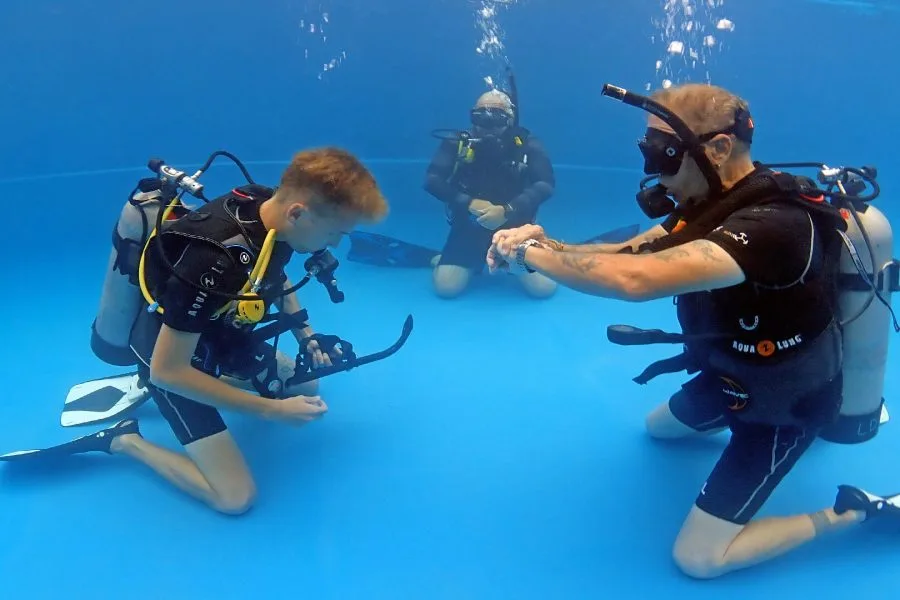
Confined-water training: practise equipment assembly, mask and regulator skills, buoyancy, air sharing and emergency procedures in a pool or pool-like environment.
Open-water training dives: demonstrate the required skills in real diving conditions under instructor supervision while gradually building comfort and awareness.
Skills You Will Learn
- Assembling, checking, using and caring for scuba equipment.
- Clearing and replacing a mask and recovering a regulator.
- Controlling buoyancy at the surface and underwater.
- Monitoring depth, time and remaining gas.
- Communicating with hand signals and staying with a buddy.
- Responding to common problems calmly and using an alternate air source.
- Planning dives within personal, training and environmental limits.
How Long Does the Course Take?
The schedule depends on the agency, eLearning progress, class size, student comfort and local conditions. Some holiday programs are organized over several consecutive days, but faster is not automatically better. A responsible instructor gives students enough time to meet every performance requirement rather than simply following the calendar.
Before booking flights or onward travel, remember that divers need an appropriate surface interval before flying. Ask the center to explain current guidance and schedule the final training dive accordingly.
Why Learn in Hurghada?
- Access to shallow training areas and open-water reef environments.
- Warm destination with diving operations throughout the year.
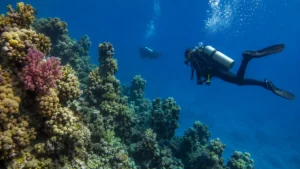
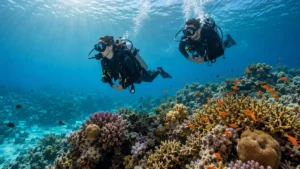
- The opportunity to see coral and reef fish during certification dives.
- A broad local diving community and continuing-education options after certification.
- French-language support can be requested from French-speaking professionals, subject to availability.
What Should the Price Include?
Ask for a written list. Depending on the provider, the package may or may not include learning materials, equipment rental, cylinders and weights, boat trips, transfers, meals, certification processing, marine fees and extra training time. Confirm the cancellation policy, medical requirements and what happens if weather interrupts the schedule.
How to Prepare Before Arrival
- Complete eLearning early and write down questions for the instructor.
- Answer the medical questionnaire honestly and arrange clearance when required.
- Practise relaxed swimming if you are worried about the watermanship assessment.
- Avoid planning the course immediately before a flight.
Tell the center your preferred teaching language and any learning or accessibility needs.
After Certification
Certification is the beginning of learning, not the end. Make several easy dives to consolidate buoyancy, trim, breathing control and situational awareness. Keep a log, stay within your limits and consider a refresher if you stop diving for an extended period. Advanced, Nitrox, buoyancy, navigation, deep and rescue training become more useful when chosen to solve a real skill need rather than simply collect cards.
Start Your Course with Clear Expectations
Tell us your dates, age, swimming confidence, medical-clearance status, preferred language and previous experience. The team can then confirm the appropriate course, schedule and inclusions you commit.
Frequently Asked Questions
Do I need previous scuba experience?
No. Open Water is an entry-level certification course, although comfort in the water and the required swimming ability are important.
How deep can an Open Water Diver go?
Under PADI standards, adult Open Water Divers are trained to a maximum depth of 18 metres. Junior limits vary by age, and other agencies may describe their standards differently.
Do I need to buy equipment?
Usually not for initial training if rental equipment is included. Confirm what the course supplies and consider owning a well-fitting mask first.
Can the course be taught in French?
Ask Rentola to confirm a French-speaking instructor for your dates before booking.